

When James Cameron first introduced audiences to Pandora in 2009, it felt like stepping into a dream a bioluminescent paradise of floating mountains, fierce wildlife, and spiritual connection. With 2022’s The Way of Water, he plunged us into the ocean, revealing reef tribes and majestic tulkun. Now, with Avatar: Fire and Ash, Cameron completes the trilogy’s elemental journey by taking us in the opposite direction: into the heart of volcanic darkness.
The film, which opened December 19, 2025, remains the number one movie in multiple countries and the highest-grossing film of February 2026. But beyond the box office dominance, what makes this third chapter essential viewing?
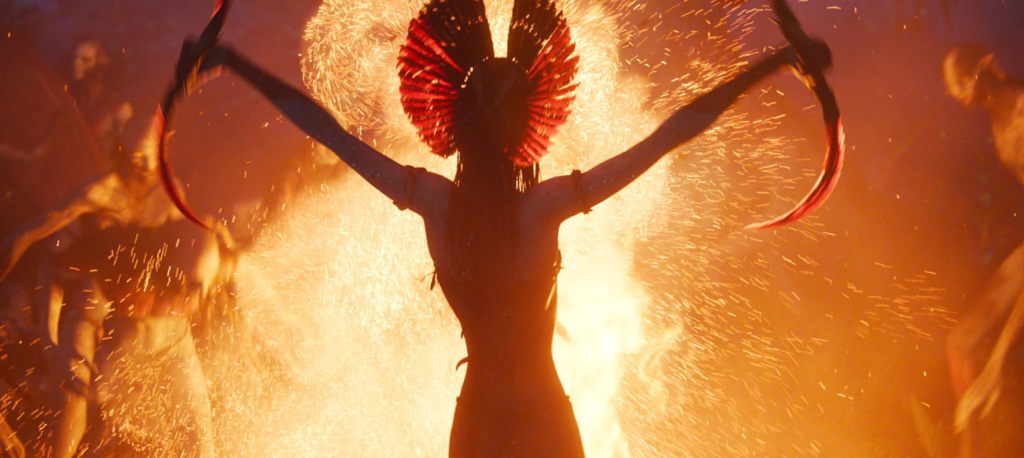
The title promises ash, and the film delivers. The Mangkwan Clan—known as the Ash People—inhabit a Pandora we have never seen. Instead of lush forests or crystal-clear waters, their world is forged in volcanic destruction. This is a civilization built on the edge of lava flows, where the Na’vi have adapted not to harmony with nature, but to survival against its most violent forces.
A World of Fire
Director James Cameron describes this as a deliberate evolution. He explains that this film is a culmination of the adventure across the previous two movies, bringing audiences on a new journey that surpasses the scale and impact of The Way of Water.
Director James Cameron describes this as a deliberate evolution. He explains that this film is a culmination of the adventure across the previous two movies, bringing audiences on a new journey that surpasses the scale and impact of The Way of Water.
Technology Pushed Further
The visual leap from the first Avatar to its sequel was staggering. The leap to Fire and Ash is just as significant. Cameron and his team at Lightstorm Entertainment have once again pushed performance capture technology into new territory, this time mastering the challenge of rendering fire, smoke, and volcanic light interacting with Na’vi skin and movement.
The cast trained extensively for new performance demands, transitioning from the underwater sequences of the previous film to the intense physicality required for volcanic environments.
Personal Responsibility and Choice
But Fire and Ash is not just technical wizardry. The film introduces a fundamental question the franchise has never fully explored: what happens when the Na’vi are not the innocent victims?
The Ash People are not corrupted by humans. They are Na’vi who have made different choices, shaped by trauma and survival in a hostile environment. Their leader, Varang, presents a challenge Jake Sully has never faced: an enemy who shares his face, his physiology, and his connection to Eywa, but whose values stand in direct opposition to everything he has fought to protect.
This moral complexity elevates Fire and Ash beyond simple sequel territory. It is not just bigger—it is darker, more ambiguous, and willing to challenge audience assumptions about who deserves sympathy on Pandora.
The Sully Family’s Darkest Hour
The film picks up roughly one year after the events of The Way of Water. The Sully family is still mourning the death of Neteyam, and that grief stains every interaction. Jake and Neytiri must protect their remaining children—Lo’ak, Kiri, Tuk, and Spider—while facing threats from both Colonel Quaritch, reborn in his Na’vi recombinant body, and the entirely new danger of Varang’s Ash People.
With a runtime of three hours and fifteen minutes, Fire and Ash demands commitment. But for fans of the franchise, it offers the deepest immersion yet into Cameron’s endlessly inventive world.
For a complete guide to the incredible cast bringing this world to life, including the performances and new additions to the ensemble, read The Stars of Avatar: Fire and Ash.